
Origins (2013–2017)
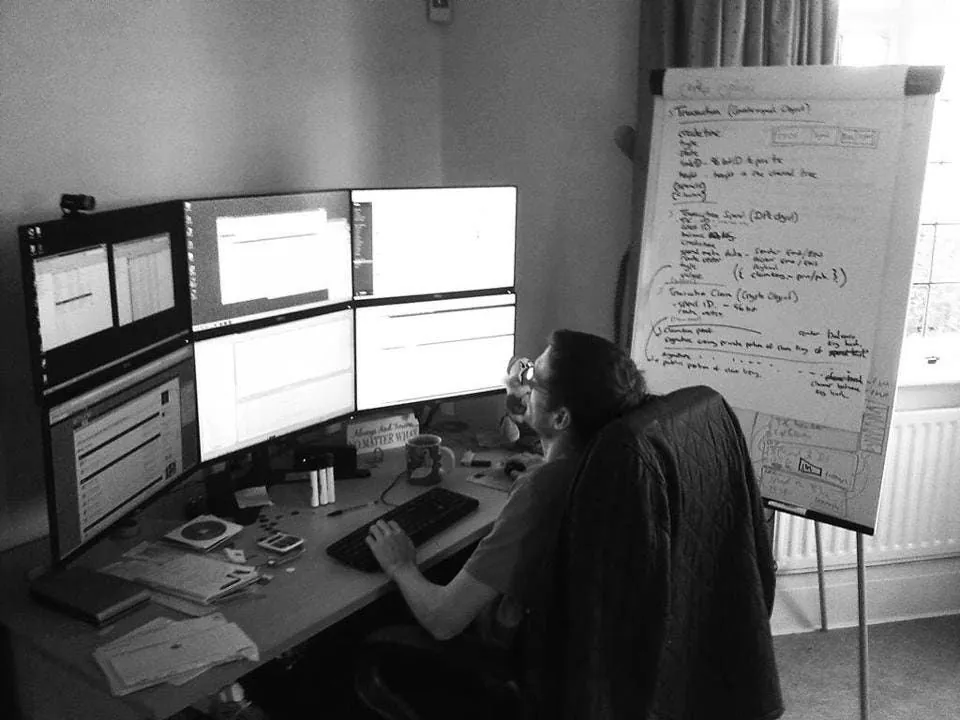
Dan Hughes began working on what would become Radix in 2013 under the name eMunie. His goal was to create a decentralized ledger capable of scaling to serve the entire world's financial transactions – a problem he recognized existing blockchains could never solve with their single-threaded architectures.
Hughes explored numerous consensus approaches over several years, including Tempo, a DAG-based consensus mechanism. These early experiments laid the groundwork for understanding the fundamental requirements of a scalable distributed ledger: parallelism, deterministic execution, and composability.
Cerberus and RDX Works (2018–2020)
By 2018, Hughes and the growing team developed Cerberus, a BFT consensus protocol specified around braided cross-shard consensus: rather than fixing shard boundaries in advance, it forms a temporary consensus group from the validators of exactly the shards a transaction touches, preserving atomic composability at unlimited parallelism. The Cerberus whitepaper was published in 2020 and underwent academic peer review.
Braiding is a specification rather than a description of a running system. It has never run in production: Babylon mainnet runs Cerberus unsharded, where there is nothing to braid – a configuration equivalent to the original HotStuff – and the Xi’an production candidate does not braid either. The Cerberus page sets out the divergence in full.
The company was formalized as RDX Works, with offices in London. The team grew to include specialists in distributed systems, programming language design, and formal verification.
Olympia Mainnet (2021)
The Olympia mainnet launched in July 2021, establishing the Radix network with basic token transfers and staking. While Olympia was intentionally limited in scope (no smart contracts), it demonstrated the network's validator infrastructure and XRD tokenomics.
Babylon Mainnet (2023)
The Babylon upgrade in September 2023 was Radix's transformative release, introducing:
- Scrypto – Radix's Rust SDK for writing asset-oriented smart contracts
- Radix Engine – deterministic execution environment with native assets
- Transaction Manifests – human and machine readable transactions
- Smart Accounts – programmable accounts with access rules
- Radix Wallet – with Personas and dApp connections
Babylon enabled the rapid growth of a DeFi ecosystem including CaviarNine, Ociswap, Weft Finance, and dozens of other projects.
Dan Hughes (1979–2025)
Dan Hughes, who founded Radix, died on 27 July 2025. He had spent more than a decade on how a ledger could scale without giving up composability, work published as the Cerberus consensus paper.
In the months after his death:
- The Radix Accountability Council was established through community election
- hyperscale-rs, a community-led implementation, continued development
Road to Xi'an
The Radix Foundation’s final public Hyperscale test concluded in January 2026: its reference implementation sustained over 500,000 transactions per second with peaks above 700,000 across more than 590 participating nodes on commodity hardware, and private tests scaled linearly from roughly 250,000 TPS on 64 shards to 500,000 on 128. The software under test was the Foundation’s Hyperscale implementation rather than Cerberus.
Development has since moved to hyperscale-rs, the community-led Rust implementation that is now the Xi’an production candidate. Its execution layer is changing too: on 1 August 2026 the lead developer confirmed that a purpose-built virtual machine is underway to replace the Radix Engine, rather than a sharding retrofit of it – an option he assessed as "not in the ballpark" for sharded operation. Existing dApps are expected to migrate rather than be rebuilt: "best case scenario - contracts will just need a recompile", worst case an automated transpiler. None of this affects Babylon mainnet, which continues to run the Radix Engine.
The last schedule Radix published for Xi'an is the Radix Labs roadmap of 30 November 2024, which put its launch in the second half of 2027 and planned to get there by sharding the Radix Engine. The virtual machine replaced that plan, the lead developer of hyperscale-rs has declined to give new dates, and nobody has published one since.
The halt (2026)
On 31 August 2026, between 16:02 and 16:58 UTC, twenty-six transactions emptied every Hyperlane-bridged asset held on Radix, out of user accounts and out of the liquidity pools of Radix dApps alike, without a single owner signing anything. Five hours later the cause was named in public: not the bridge, but the Radix Engine itself, where an invocation could reach a vault its caller had no visibility of. That is the layer every transaction on the network passes through, and the exploit for it was on the ledger for anyone to read.
Validators stopped rather than keep producing rounds against it. Radix consensus needs more than two thirds of staked XRD to be validating and simply stops below that threshold, which is the liveness half of a trade-off it makes in favour of safety, so the ledger committed its last round at 21:19:48 UTC, state version 557,840,627 in epoch 339,897, and stayed there for ten and a half days. Wallets, the dashboard and the explorers went dark within minutes, because they all read a Gateway that would not answer a question about a present it was hours behind. Readings taken through the Gateway during the halt cite state version 557,840,622, where its status endpoint stopped; the ledger itself ran five state versions and 43 seconds further.
The repair is a protocol update named Eagle Ray, and its whole content is a check the kernel now runs before an invocation: the caller must be able to see the receiver it is calling. It merged into Scrypto on 7 September and into babylon-node on 8 September, and on 9 September the Radix Accountability Council reported it deployed and validated end to end on Stokenet. Mainnet restarted at 11:35 UTC on 11 September 2026, 254 hours after it stopped; Eagle Ray was enacted at the start of the next epoch and user transactions resumed at 11:39 UTC. The incident is written up at Hyperlane Asset Drain and Network Halt (August 2026), and the record read from the ledger day by day through the outage is at its timeline.
The Composability Gap
The property Radix was built to deliver has been demonstrated once, in a prototype, and has never run on a Radix production network: atomic composability across shards, so that a single transaction touching state on many shards either commits everywhere or nowhere.
- December 2020: the Flexathon, a solo hackathon Hughes ran over his vacation, produced a working demonstration of atomicity and composability across shards under Cerberus. It was shown in a Radix Labs session, Radix Founder Demonstrates Cross Shard Atomic Composability, published 19 May 2021. Hughes' own diary was explicit that the prototype would “not bear any resemblance to any of the networks planned for release on our roadmap”, and no public copy of its source survives.
- 28 July 2021: Olympia launched with a single shard group and no smart contracts.
- 28 September 2023: Babylon brought Scrypto, the Radix Engine and smart accounts, and also runs a single shard group. With one shard group there is nothing to shard across: Cerberus reduces to its unsharded case, equivalent to the original HotStuff, and braiding has nothing to braid.
- 30 November 2024: the Radix Labs roadmap scheduled multiple shard groups for Xi'an in 2027, on a sharded Radix Engine. That plan was dropped in August 2026. The work proceeds in hyperscale-rs, on a purpose-built virtual machine, with no published date, and takes nothing from the Flexathon build.
Nearly six years have passed since the demonstration, and the intervening releases delivered a great deal that was not sharding: an asset-oriented execution environment, a wallet, a DeFi ecosystem. Reading the timeline as a sharding roadmap that slipped misses what shipped; reading the demonstrations as production capability overstates what runs today.
Investors
Saul Klein, co-founder of LocalGlobe, invested $1 million in Radix DLT in 2018. He was removed as a director on 5 June 2023.
History / Events
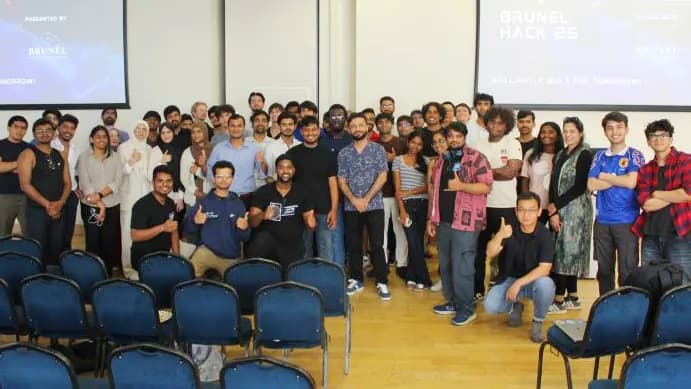
Brunel Hack 25 - Brunel University
Brunel Hack 25 was a 2-day hackathon on the 12-13th of July, 2025, organized by the Brunel Society of Blockchain and held at the university campus in…
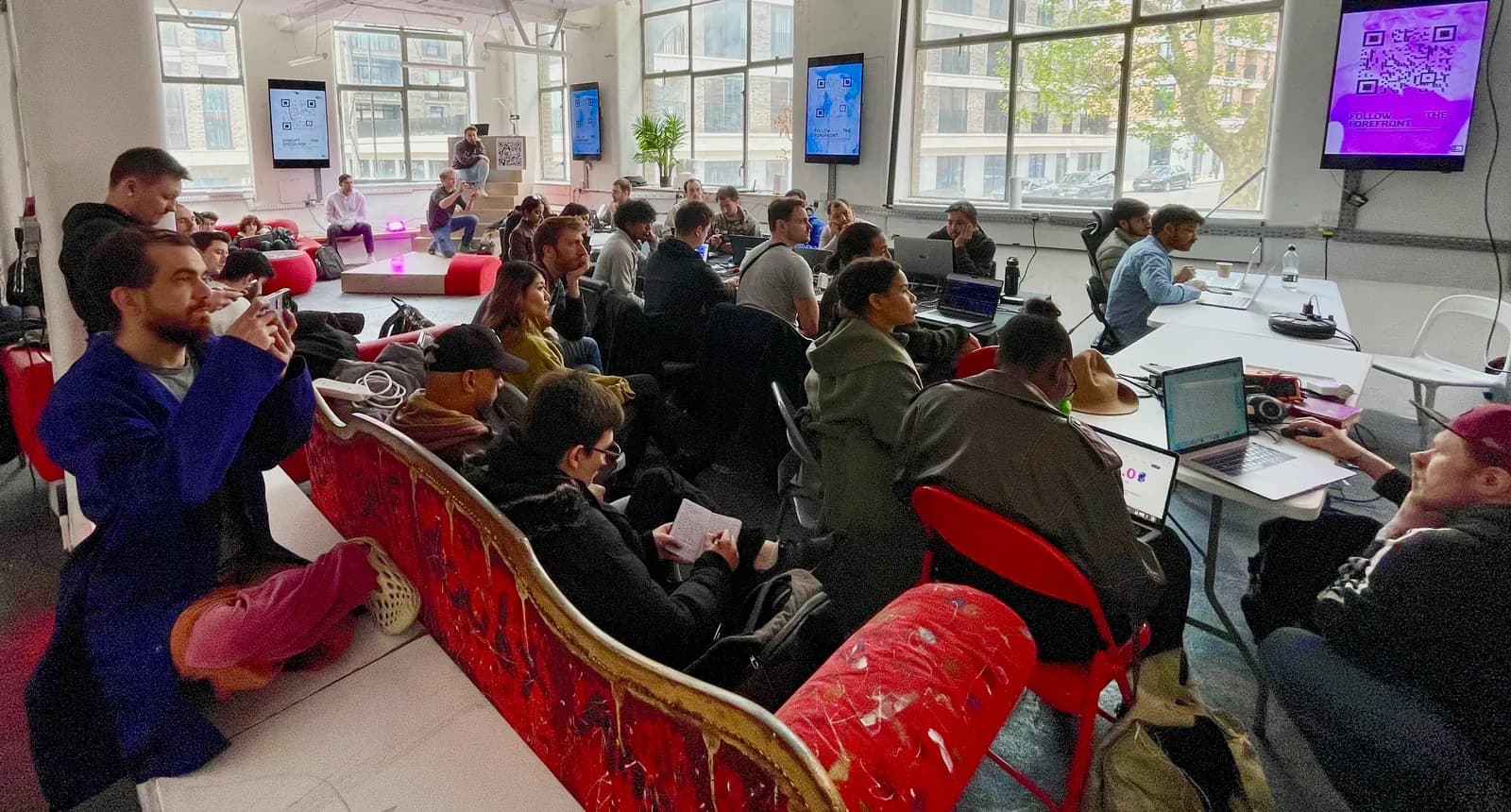
Radix Wiki Hackathon #1
The Radix Wiki Hackathon #1 was held at the ArtSect Gallery in London on the 20-21st April, 2024. TELEGRAM → https://t.me/RadixHackathon “I woke up ha…