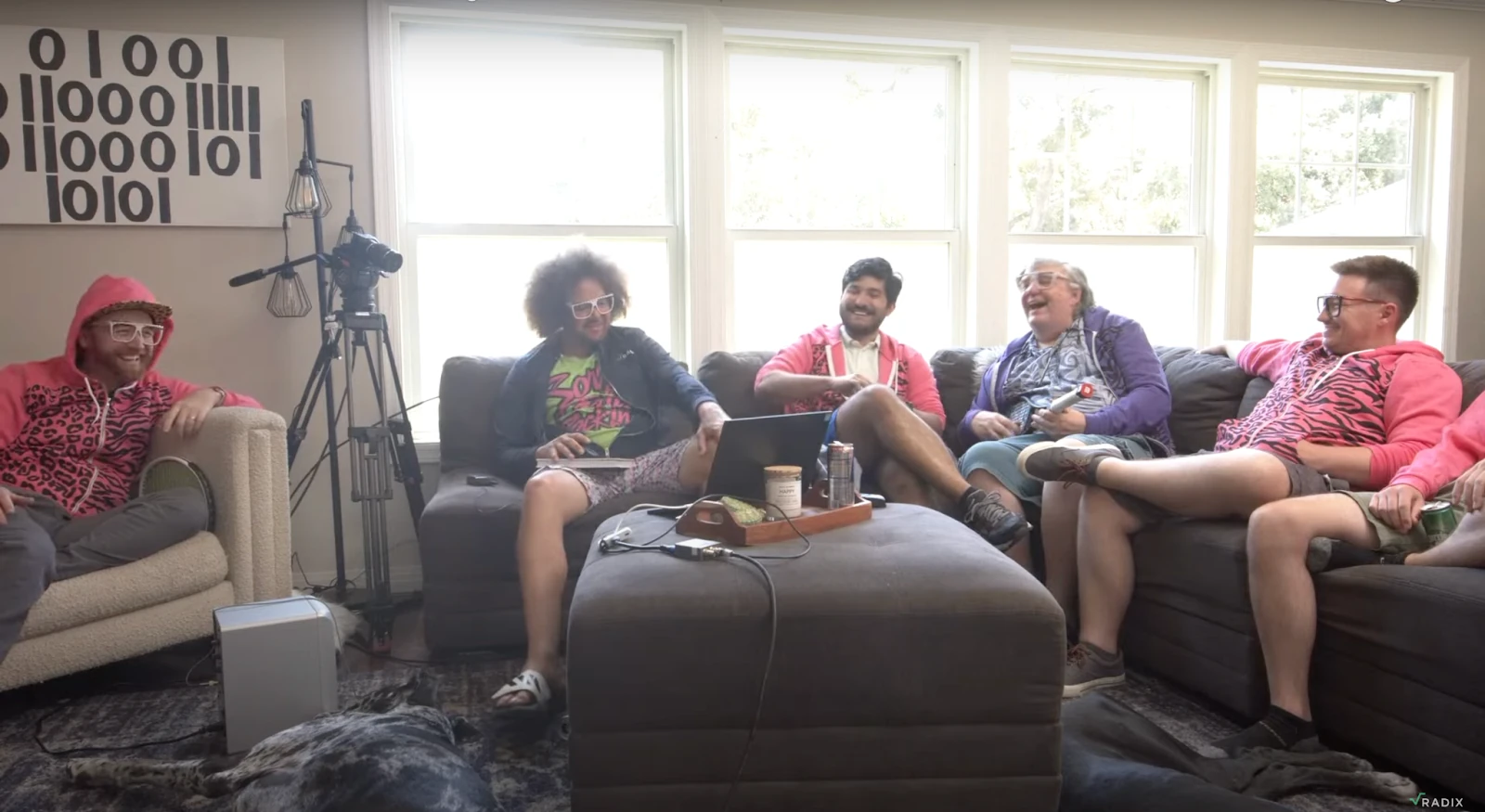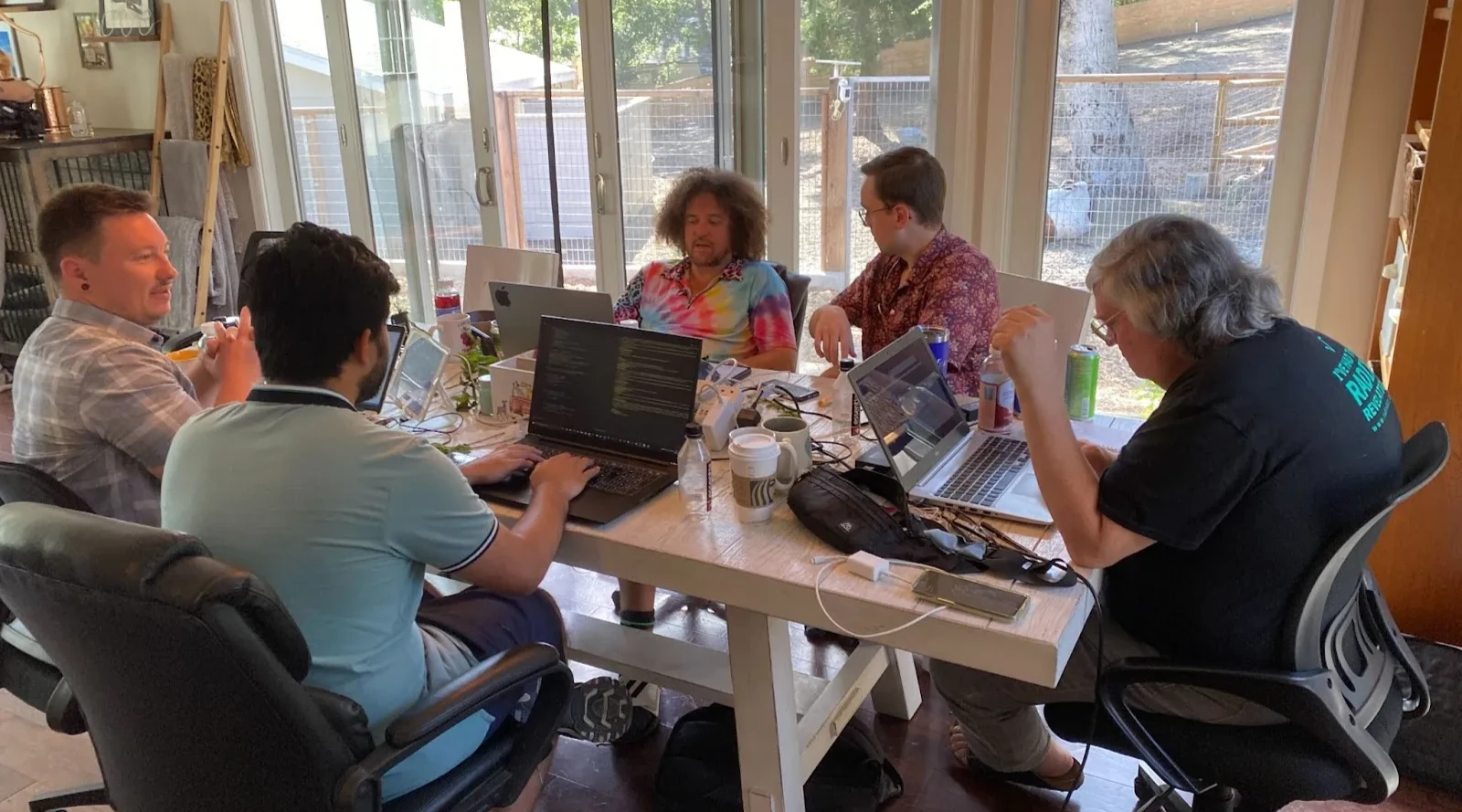
FooHack was a three-day hackathon held from 14 to 16 June 2022 by the multi-platinum musician RedFoo at his "Party Rock Mansion" in the Malibu mountains, organised in collaboration with RDX Works. It was fuelled, in RDX Works' telling, by vegan food and raw cacao.
Background
RedFoo – a Grammy-nominated, multi-platinum artist – had by 2022 become a Web3 coder and an enthusiast for Scrypto, Radix's Rust SDK for writing asset-oriented smart contracts. He had been introduced to Scrypto only three months before the hackathon, which RDX Works presented as the point of the exercise: a beginner in the language climbing the learning curve in public. For FooHack he handpicked three competition-winning programmers, and the four of them, dubbed the FooCrew, had, on RDX Works' account, been strangers the week before. RDX Works announced the event on 5 May 2022, paying the selected developers' travel and accommodation.
What Was Built
The FooCrew built Radichess, a chess game whose rules are enforced by Scrypto blueprints rather than by a game server. According to the repository's README, one component registers players and keeps the list of games, each game is its own component that players join and make moves in, and the board module validates every move and declares the winner at checkmate. Registering gives a player a badge resource in their wallet, which serves as their identity in the game. @jameswylie built the React frontend for creating, joining and spectating games and viewing a leaderboard; RockHoward, beemdvp and RedFoo worked on the Scrypto side. The two halves ran on the Public Test Environment, the temporary network RDX Works provided before a real test network existed. On the last day RedFoo played a live game against the community member Avaunt, streamed as "FooHack Live Stream: The Chess Engine is Alive!".
The auction did not ship with the game. RedFoo took the auction components, and the repository holds a separate auction blueprint, but the README describes the link between the two, minting each finished game as an NFT and putting it up for auction, as the plan rather than as something built. The idea of chess on the ledger had first appeared as an internal experiment at the Radix Team Hackathon in 2019, where the rules were enforced through board and move Particles on the pre-Babylon ledger.
Scrypto Significance
RedFoo praised Scrypto in the line that gave the accompanying blog post its title: "Coding in Scrypto is as smooth as vegan butter." RDX Works contrasted the FooCrew's three-day build against a student project at the Technical University of Berlin, which it said had spent an entire semester attempting a chess game in Solidity on Ethereum without finishing it – attributing the difference to Scrypto's buckets-and-vaults model for handling resources natively. FooHack sat alongside the Scrypto Developer Event and Scrypto DeFi Challenge in Radix's push to grow the Scrypto developer community.