
Building Radix's Developer Pipeline: Nine Events and Counting
4 min read
How university workshops can be the foundation for a self-sustaining Radix education movement.
Since the Radix Wiki Hackathon back in April 2024, our thesis has been that developers are the primary customers of distributed ledgers. The best time to onboard a developer is at the start of their career, before they've accumulated sunk costs in another ecosystem's tokens and tooling. If Radix could build the most effective onboarding program for new developers, it would secure a compounding strategic advantage. The Scrypto 101 and Step by Step courses already existed, but they weren't reaching junior developers in sufficient numbers so we partnered with the Radix Foundation to put these tools directly into the hands of computer science students at UK universities.
Stage 1: 2024
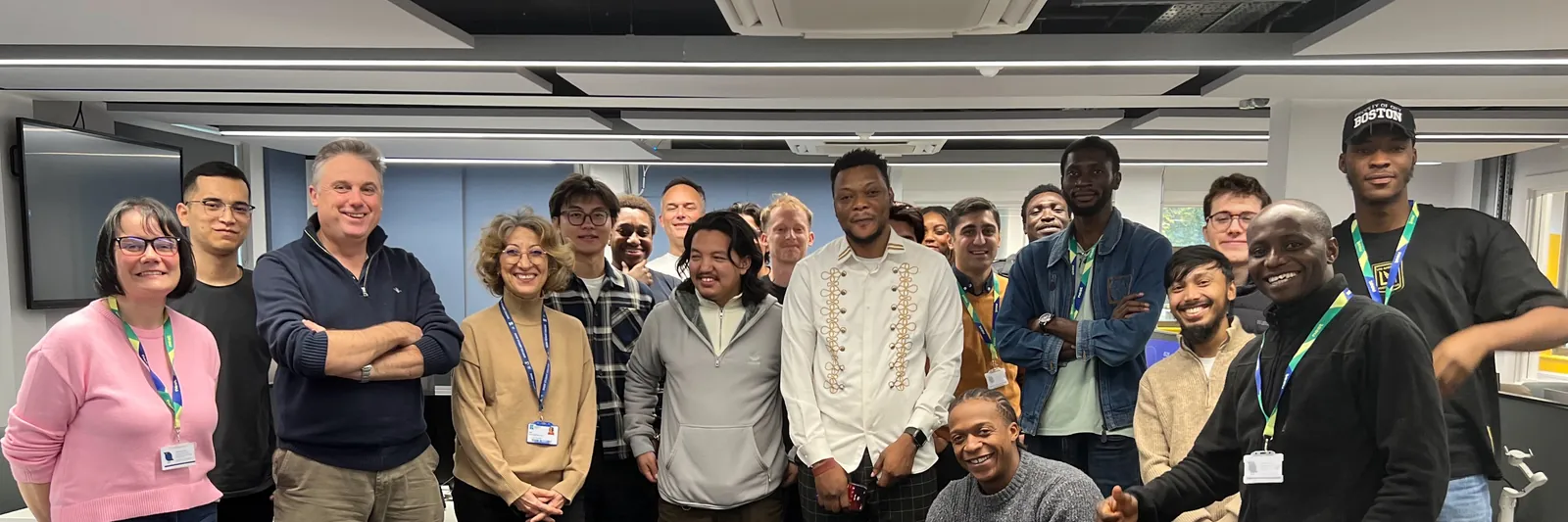
Stage 1 was a humbling proof-of-concept: three workshops at Westminster, St Mary's, and Roehampton Universities in late 2024. The documentation had never been properly stress-tested at scale, and a hundred students with different operating systems and setups quickly exposed it as out of date and confusing. The students were also far more junior than anticipated - many had never heard of Web3, let alone smart contracts. This was a huge surprise. At Westminster, with a mentor-to-student ratio of 1:15, we managed about a 7% Stokenet deployment rate. At St Mary's, with a smaller cohort and a 1:5 ratio (and Dan Hughes in the room 💙), that jumped to 33%. At Roehampton, where 70 students showed up and a surprise dependency update threw our installations into chaos, we only scraped a single deployment. However, this was never about getting things perfect on the first try.
Radix’s tech stack is far superior to other chains, but there are certainly still things we can learn from them around building a productive developer ecosystem:
The workshops had surfaced problems that would otherwise still be silently hampering Radix adoption, and the RDX Works team immediately started working on a one-click installation solution.
Stage 2: 2024/25
Stage 2 ran through 2025 with a more realistic understanding of what we were dealing with.
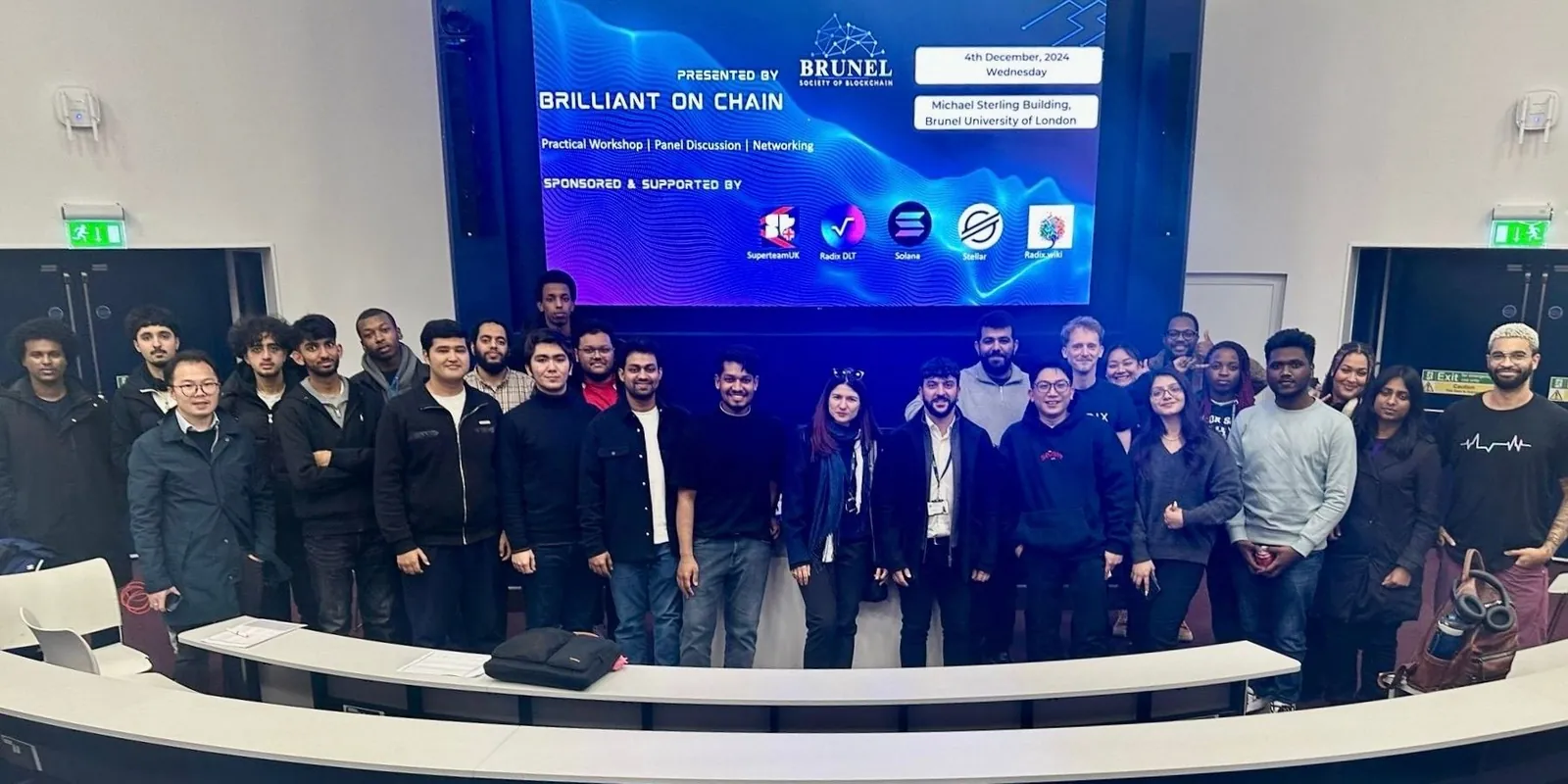
Brunel's Blockchain Society invited us for "Brilliant On Chain" in December 2024, where 58 attendees worked through the workshop in partnership with SuperteamUK, sharing the evening with a panel featuring experts from Radix, Solana, and Stellar.
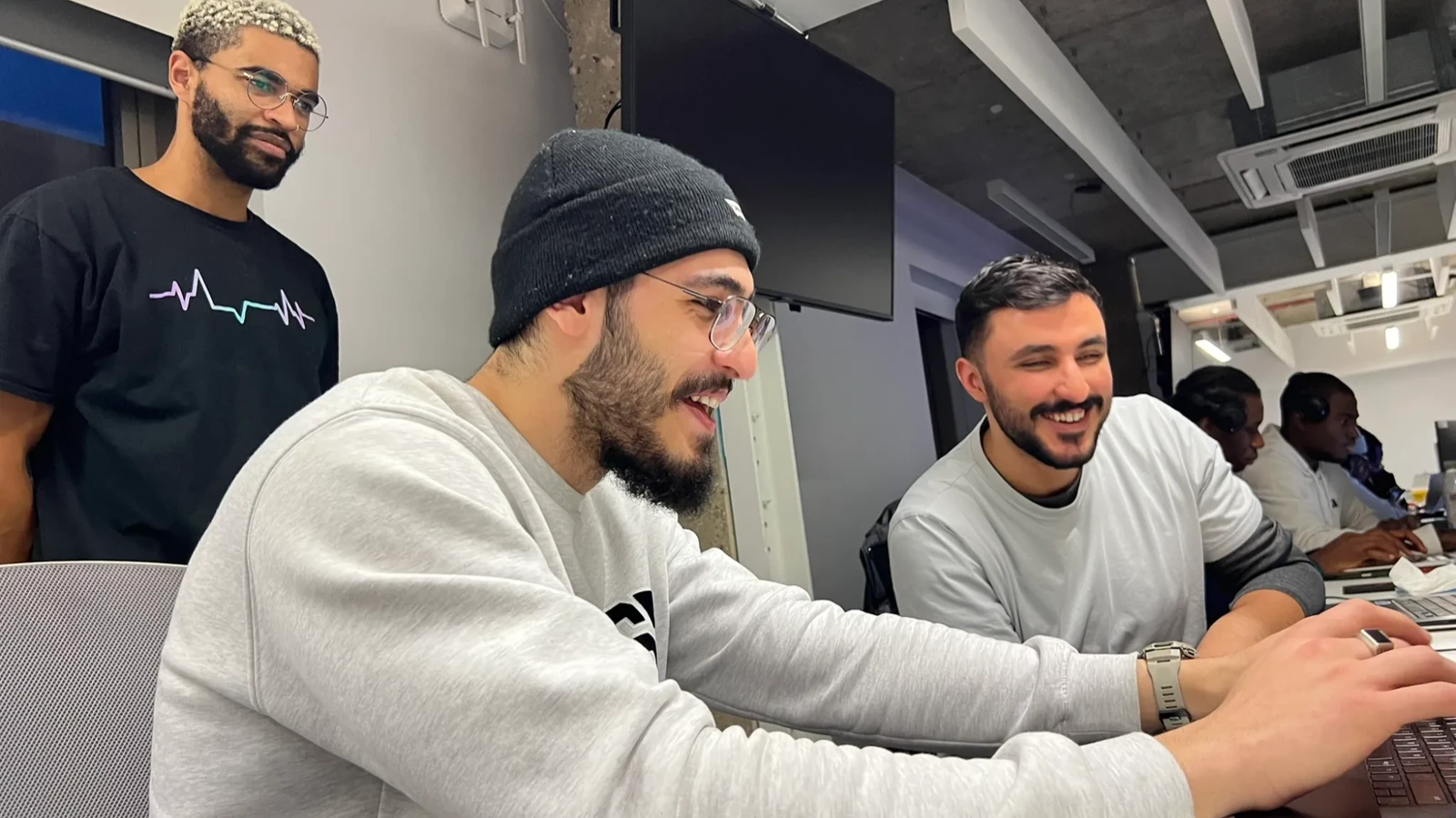
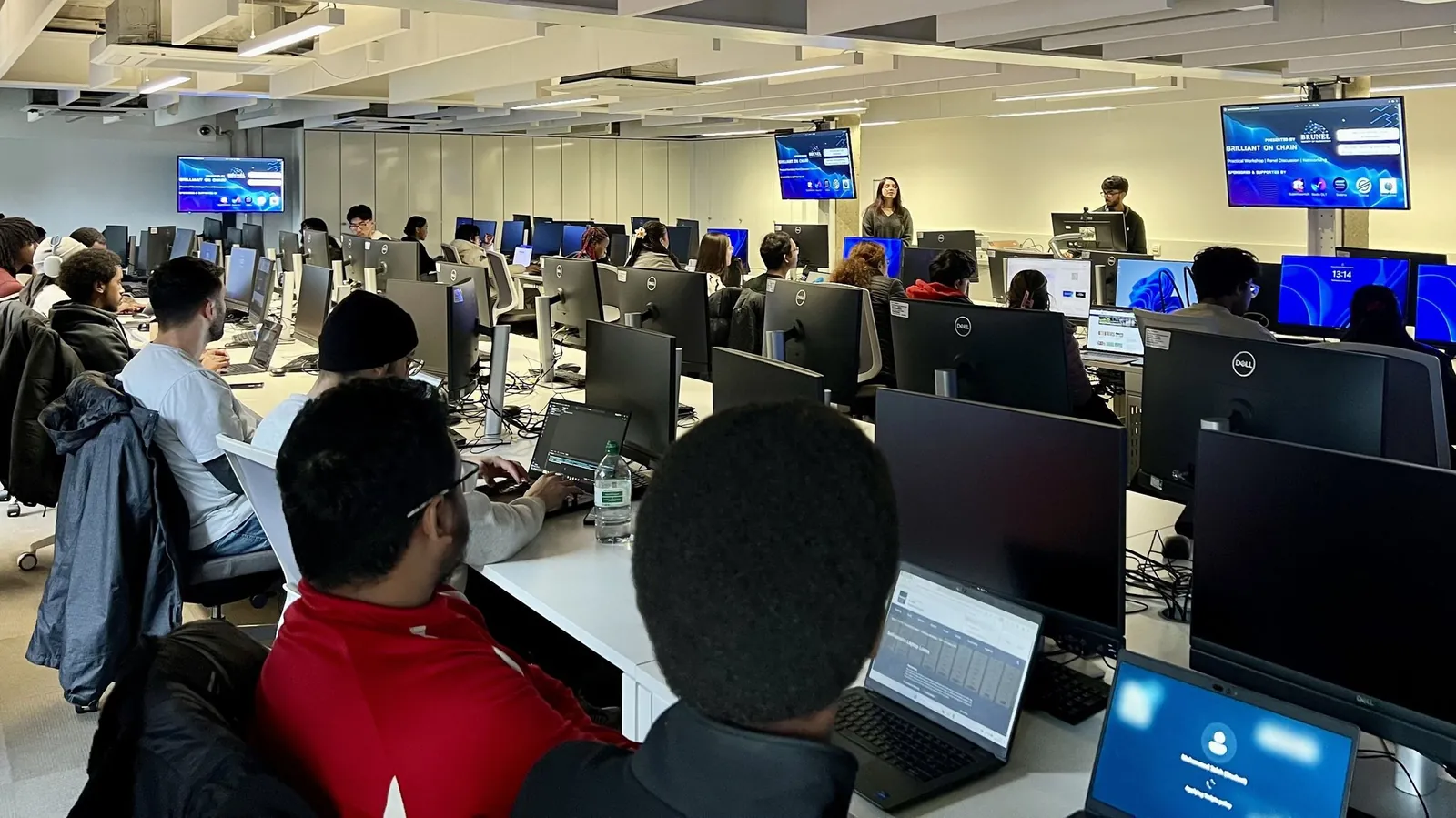
We returned to St Mary's ESports Arena in February with Shardspace as sponsor, running a tighter session with 11 participants.
Then came Brunel Hack 25 in July - a two-day hackathon that drew ~200 people and produced three genuine project submissions, including Streamflow, a decentralized tipping platform for content creators.
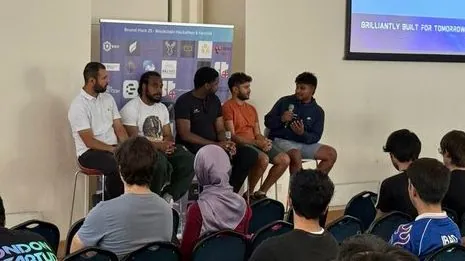
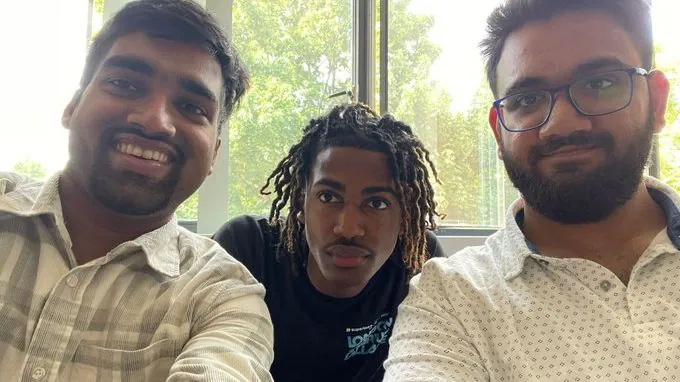
In September, again sponsored by Shardspace, we partnered with Crystalisr and LSBU for Hack The System in Croydon, a community wealth building event exploring how Web3 could serve South London's creative economy.
By November, Roehampton had invited us back for their Career Development Week, where 35 students worked their way through the curriculum and two more deployed to testnet.
The numbers only tell part of the story: nine events, well over 300 attendees, and around 220 component deployments to Stokenet. Brunel Hack alone accounted for more than 200 of those deployments, demonstrating what becomes possible when the tooling works and participants have sufficient time. But the real value lies in the infrastructure being built around these events. There’s an almost insatiable appetite for these kinds of events. Universities are now approaching us for repeat bookings. Students who attended early workshops returned as mentors. Blockchain societies have formed at Westminster and St Mary's. We've been invited to contribute to academic modules, careers fairs, and industrial liaison meetings. Contacts from St Mary's want to help roll out workshops across India. Each event spawns more opportunities than we can manage.
Stage 3: Radix Global
Building in a desert is hard work - lonely, uncertain, and easy to dismiss. But in the end you get Vegas or Dubai, and people fly in from all over the world to see what you've made. That's the bet we're making with Radix. The ecosystem is still relatively sparse compared to Ethereum or Solana, and convincing students to invest their time in a platform without the network effects of incumbents requires a leap of faith on both sides. But every developer who deploys their first Scrypto component, shares an NFT with a friend, and experiences the absence of gas wars and failed transactions becomes an early inhabitant of a city that doesn't exist yet. When Radix hits critical mass, they'll already know their way around.
The vision remains what it was in the original proposal: to build something like an ETH Global for Radix, where events become self-sustaining through sponsor funding rather than grants. The path there runs through continued refinement - containerizing dependencies into genuine one-click solutions, establishing alumni pipelines, securing tiered sponsorship packages, and developing repeatable playbooks that work with any venue. Polygon grew the same way: its founders met many of their first team members at ETHIndia 2018, its own BUIDL IT hackathon drew 5,031 registrations in October 2021, and from February 2022 it sponsored every student-run hackathon on Devfolio that crossed 500 applications. The difference between Radix and competitors won't be made in the quality of the technology alone; it'll be made in whether the next generation of developers encounter Radix first, find it a delight to build with, and never look back.
RADIX.wiki is a knowledge and community hub for the Radix ecosystem. Follow us on Twitter for updates.